.png)
Speakers & Sessions
Expert voices bringing critical insight to the issues shaping our industry.
General Session

Tara Bayke
Uncertainty makes even the strongest businesses hesitate. When markets shift, leaders need more than forecasts – they need clarity, context, and a plan. This session will help business leaders understand what is coming next, how it will affect their industry, and where to focus when conditions change. Inflation, interest rate changes, and margin pressures can derail pre-existing plans. Having a broad view of business cycle changes and sector-level drivers will help you identify risks and opportunities, aligning strategy, budgeting, and investments with forward-looking economic insight.
While many markets improved this year, others experienced only muted growth and are at risk of hard landings in 2027. This session will delve into the key macroeconomic drivers that will take hold next year or carry over from 2026. We will focus especially on the top economic drivers impacting your business – such as inflation, interest rates, labor, and geopolitical uncertainty – and their implications for overall cost structure, workforce strategy, the risk of profitless prosperity, and the timing of resource allocation across an organization.
ITR Economics has a long and proven track record of "seeing the future first," empowering our audiences to anticipate market shifts and prepare their strategies and tactics accordingly. ITR Economics' forecasting expertise equips decisionmakers with the knowledge needed to navigate often-turbulent markets. By leveraging these insights, business leaders can ensure their organizations remain resilient and thrive in the ever-changing market landscape.
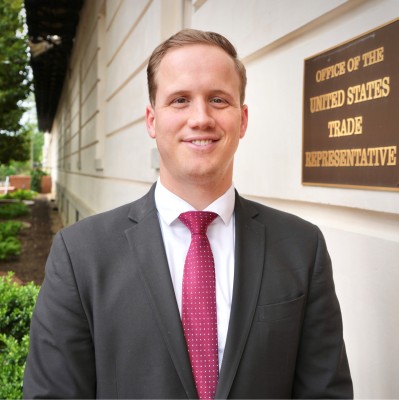
Daniel Matthews
Office of the U.S. Trade Representative
An official from the Trump Administration will provide an update on the President's trade policy agenda and its implications for the domestic steel industry. 2026 has been another busy year in trade policy, with major updates to the Section 232 steel tariffs, continued efforts to rebuild the President's "tariff wall" following the Supreme Court's decision invalidating the IEEPA tariffs, and developments related to the U.S.-Canada-Mexico Agreement (USMCA), among others. We'll hear the latest on the Administration's "America First Trade Policy," and how these developments affect the wire and wire products sector and the steel industry more broadly.

Emily Clayton
Emily Clayton is an Economist with the American Trucking Associations (ATA), the leading national trade association representing the trucking industry. She reports directly to ATA Chief Economist Bob Costello and contributes to the analysis of macroeconomic conditions and industry-specific trends affecting freight markets and motor carriers. Since joining ATA in 2022, Emily has played a central role in the research, analysis, and production of ATA's flagship economic publications and recurring reports, supporting data-driven insights for industry stakeholders and policymakers. Prior to joining ATA, she earned a master's degree in applied economics from American University.
Manufacturers are facing growing uncertainty across freight transportation, global trade, and supply chain reliability. From driver shortages and evolving transportation networks to shifts in trade policy, rail capacity, and ocean freight markets, these trends are increasingly affecting the movement of raw materials and finished products.
Drawing on economic research and industry data, this session will provide an outlook on the trends shaping the future of freight and logistics — with a focus on the implications for manufacturers over the next 12–24 months.

Scott Paul
Scott N. Paul is president of the Alliance for American Manufacturing (AAM), a partnership established in 2007 by some of America’s leading manufacturers and the United Steelworkers union. Scott and AAM have worked to make American manufacturing and “Made in America” top-of-mind concerns for voters and our national leaders through effective advocacy, policy development, and data-driven research.
Scott is a sought-after expert on trade and manufacturing matters, testifying before numerous congressional committees and penning op-eds for The New York Times and other leading publications. He authored a chapter in the 2013 book ReMaking America and has written extensively about Alexander Hamilton’s role in forming U.S. national economic policy. Scott also hosts The Manufacturing Report podcast.
Scott is the past board chair of the National Skills Coalition and sits on the Board of Visitors of the Political Science Department at the Pennsylvania State University. He also is on the Advisory Board of Indiana University’s Manufacturing Policy Initiative.
Scott earned a B.A. in Foreign Service and International Politics from Penn State and an M.A. with honors in Security Studies from Georgetown University’s School of Foreign Service. Raised in the small town of Rensselaer, Indiana, he currently resides in the Washington, D.C. area with his family.
You can follow Scott Paul on Twitter: @ScottPaulAAM.
.png)
Robert Boland
Robert Boland, Chief of Staff to House Majority Whip Tom Emmer (R-Minn.), will join AWPA attendees to deliver opening remarks at the Capitol Hill Reception.